
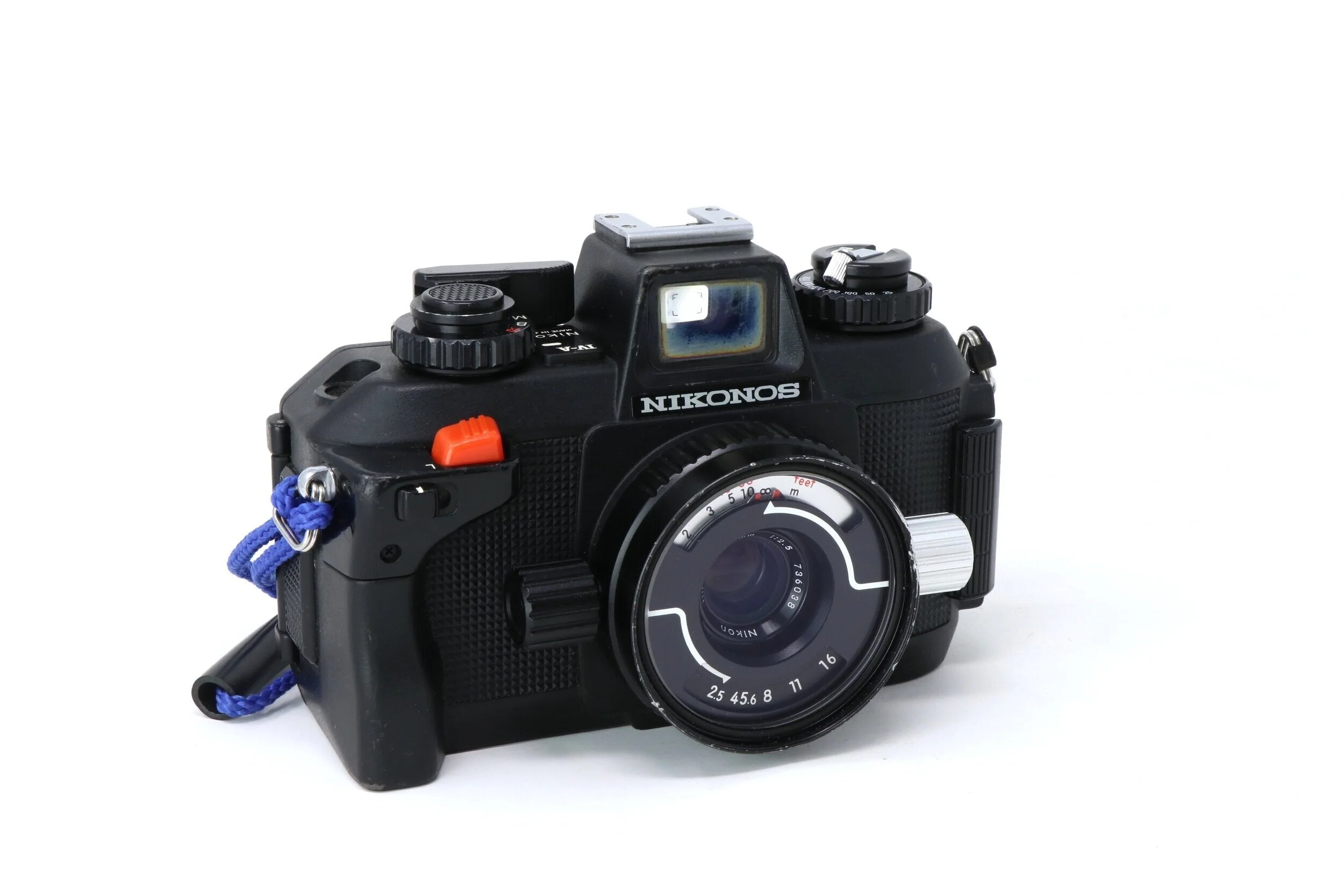
Nikon Cameras Nikonos IV-A
1980
The Nikonos IV-A, released in 1980, marked a radical departure from its fully mechanical predecessors (I, II, and III). It was the first entirely Nikon-designed model, introducing an electronic, battery-dependent system with automatic exposure control.
Key Features and Specifications
Automatic Exposure (AE): The primary innovation was the introduction of aperture-priority autoexposure (hence the "A" in IV-A). This allowed the camera to automatically select a stepless shutter speed between 1/30 and 1/1000 sec based on the chosen aperture and light conditions.
Shutter: It used an electronically controlled, vertical-travel metal focal-plane shutter.
Manual Shutter Speeds: A fail-safe was included with two mechanically controlled shutter speeds that work without batteries: 1/90 sec (M90) and Bulb (B) for long exposures.
Film Loading: The body was redesigned with a conventional hinged back for film loading, similar to standard SLR cameras, which was a significant ease-of-use improvement over the previous models' internal chassis system.
Built-in Metering: It featured built-in TTL (Through-The-Lens) center-weighted light metering using an SPD (silicon photo diode) cell, a first for the series.
Viewfinder Indicators: A red LED in the viewfinder indicated appropriate shutter speeds or blinked as a warning for over/under-exposure, or a flash-ready signal.
Depth Rating: It maintained the same robust 50-meter (165 feet) waterproof depth rating.
Construction: The camera featured a durable die-cast metal body, sealed with multiple O-rings, a design intended to be more modern and user-friendly than the previous Calypso-based models.
Despite its innovations, the IV-A had some design deficiencies, such as the flat gasket sealing mechanism being prone to failure and a lack of manual shutter speed selection, which were addressed in its successor, the Nikonos V.